
Marketing Without Social Media: 15 Ways to Grow Your Reach
In 2020, I quit social media.
After two decades of using all the popular platforms, I deleted Facebook, Instagram, LinkedIn, and everything else. (Though I am now back on LinkedIn for professional networking.)
What I've learned in my 15+ years as a freelancer is that marketing without social media is not only possible, it’s sustainable. You don't need to be everywhere… just where it actually makes sense for you and your business.
Social media is not the only way to connect with potential clients.
In this post, I'm sharing 15 ways to market your business online without relying on social platforms. Whether you're cutting out social media completely or just using it less, these strategies support intentional visibility in online marketing.
You’ll also find my favorite marketing strategies, which I’ve broken into low, medium, and high effort tasks.
Low-effort marketing (five minutes or less)
Medium-effort marketing (one hour or less)
High-effort marketing (two+ hours)

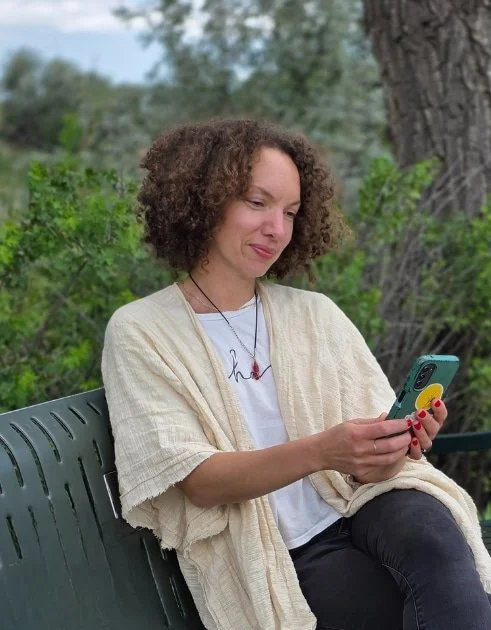
Photo by Brooke Cagle on Unsplash
Alternatives to marketing without social media
I organize my marketing into tasks ranging from five minutes to two hours — all requiring very little to no social media.
My marketing works best when it aligns with what feels good for me and my current capacity. If I’m head-down in a big project, I choose low-effort marketing tasks, like repurposing a blog post for LinkedIn or wearing a branded shirt when I’m out. This way marketing feels like a natural extension of what I’m already doing in my business.
Whether you use one or multiple social platforms depends on your target audience, marketing goals, and what works best for you. Social media is just one of many ways for a business to market and grow.
Marketing that works with you
Low-effort marketing (five minutes or less)
When I’m super busy, I’m not looking to book a ticket to an out-of-state conference. Instead, I’m using my low-effort strategies, which take me five minutes or less to do.
1. Business cards
This might seem old school, but it still works. A physical touchpoint goes a long way. Whether that's a traditional business card or a simple QR code that links to your website, portfolio, or lead magnet, a card gives people an easy next step.
Tools like Canva make it easy and affordable to design business cards. Keep a stack in your bag, car, or wherever they’re handy. You might be surprised how often opportunities to share them pop up.
2. Branded gear
Branded hats, stickers, bags, water bottles, or even a custom phone case all create brand awareness while you're not even thinking about it.
Branded gear is passive marketing at its easiest. When you're wearing or using these items, you're creating visibility with minimal effort. People notice, might ask questions, and then you're in a conversation about what you do.
3. Past and potential clients
I check in with clients I'd like to work with again. This is easy to do with an email template I can quickly edit and personalize for each one.
Staying in touch with past clients is one of the easiest ways to generate repeat business. A quick check-in email is all it takes to keep you top of mind without being pushy.
I also connect with potential clients using Hunter to get info about decision-makers at companies I'd love to write for. All I do is paste a URL and it pulls up a list of contacts at a company, including LinkedIn profiles.
If you haven't used Hunter before, it's a must for cold outreach.
4. Email signature
I keep my email signature up to date with relevant links that include anything I want people to know, like my current availability, latest blog post, or email list opt-in.
Your email signature is real estate you're already using, so why not have it do some marketing for you?
Each email you send is an opportunity to share what you're working on, what you offer, or how people can stay connected with you.
Updating your signature is a small effort that keeps marketing current without extra work. Plus, it gives people multiple ways to engage with you beyond email.
5. LinkedIn
Yes, LinkedIn is technically a social media platform, but it’s also the world’s largest professional network with over 1 billion users in more than 200 countries and territories.
The number of users (and opportunities) on LinkedIn is why I went back after deleting other accounts. Having an active LinkedIn profile also shows potential clients that I’m human and engaged online, without pressure to post or create content daily.
Medium-effort marketing (one hour or less)
I save medium-effort tasks for my marketing day, which is on Wednesdays.
I make sure I have at least three hours a week to focus on strategy, outreach, and content, so my marketing stays in motion.
6. Cold outreach
Thoughtful, personalized cold outreach is one of the most effective ways to market without social media, especially if you enjoy 1:1 connection.
Cold outreach doesn’t need to feel spammy. I’m not talking about mass emailing people or pitch slapping them. I mean outreach that’s rooted in research and intention. When it’s personalized, thoughtful, and strategic, outreach opens doors to new conversations, collaborations, and clients.
Outreach is one of my go-to strategies when I want to be the most proactive about growth without spending hours creating new content.
If this approach resonates, I teach my full system inside my Cold Outreach Workshop, where I break down how to make outreach part of your marketing without it feeling salesy or awkward.
A simple, consistent outreach habit goes a long way.
7. Newsletter
You can grow your email list by offering subscribers a free download that answers a common problem they deal with.
Email is one of the most reliable marketing channels because it’s algorithm-proof. Social platforms change algorithms or even shut down, but your email list is a direct path from you to your audience.
Build your list with a lead magnet that solves a real problem for your audience. Then, email consistently to build trust, stay top of mind, and grow your business.
Just a note that if email marketing feels overwhelming, it’s totally okay to focus on quality over frequency. Whether you send daily or monthly emails depends on your business type, goals, and strategy.
8. Networking
Networking is about building relationships with people who understand what you're doing and can support your growth. Some of my top referrals have come from fellow business owners in my network, not from direct marketing.
I stay active in the copywriting group, Confident Copywriting. I also attend virtual networking events regularly.
Network marketing without social media might seem impossible, but it's not. Online events are a great way to connect with like-minded business owners who could become a client or referral source.
9. Content ideas
I write down ideas I get from Voice of Customer research and everyday experiences. I keep these in an Asana project, so I have plenty of material when it’s time to write new content.
Having a content idea bank is a brain-saver when you're busy. Instead of staring at a blank screen wondering what to write, I pull from my list of ideas that I know my audience cares about.
I use Voice of Customer research to understand exactly what my audience is asking, struggling with, or curious about. Then I combine that with SEO research to see what people are searching for, so the content is relevant and discoverable.
When inspiration lands, whether it's from a client conversation, a podcast, or a shower idea, I put it in Asana. This way, I'm not scrambling for ideas when I’m ready to create new content.
10. Upwork
I got my first, second, and third clients on Upwork. These first few projects helped me build my portfolio and confidence, while giving me reviews I can use.
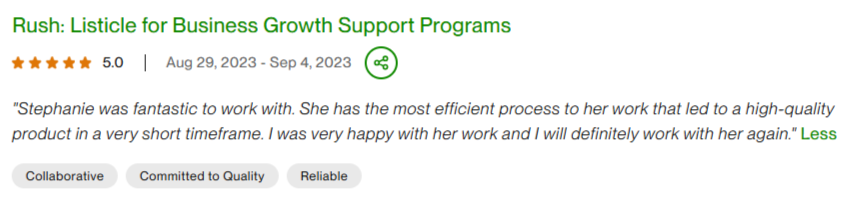
Upwork can be a great starting place, especially if you're building your portfolio or you want to take on side projects while you grow your own client roster. The key is being selective about the projects you apply for and setting your rates appropriately.
I find that the clients I connect with on Upwork value quality, but I’ve also learned that it's easy to get stuck in a race to the bottom without a strategy.
For tips on using Upwork, I recommend Laura Briggs' podcast episode, "Pros and Cons of Using Upwork." It's a balanced look at how to make the platform work by using it strategically.
High-effort marketing (two+ hours)
In business, there will naturally be busy and slow seasons.
When it's slower, I see which high-effort marketing tasks I can do to make the most of the extra time. I also schedule these tasks as part of my regular content plan, but it's worthwhile to do more high-effort marketing when I can.
11. Website
Your website is the foundation of marketing without social media.
It's where people go to understand what you do, who you help, and whether you're a good fit for what they need — whether they've found you through a Google search, referral, or your outreach.
A strong website does the heavy lifting for you. It answers questions, builds trust, and positions you as the expert before a conversation even happens. When your messaging is clear and your site is easy to navigate, you're already halfway to converting a visitor into a client.
If you plan to do cold outreach, your site needs to be outreach-ready. That means clear messaging, an updated portfolio or case studies, and an easy way for people to contact you or book a call. Here are some tips to get your site outreach-ready.
12. Blog
The content I write now will get repurposed year after year. My blog is a time-saver when I need content to repurpose quickly.
Blogging is one of the most effective long-term marketing strategies because it compounds over time. Each post you publish becomes a resource that can attract new visitors months or even years later through search.
I focus on writing content that answers the questions my ideal clients are actually asking. This comes from Voice of Customer research and understanding what people are searching for. When I publish a post, I repurpose it into LinkedIn content, newsletters, and even lead magnets.
The beauty of blogging is that it works even when you're not. While you're working on client projects or taking time off, your blog posts are showing up in search results and bringing people to your site.
If you're just starting out, aim for consistency over perfection. One well-researched, valuable post per month is better than sporadic posting with no clear strategy.
13. Lead magnet
A high-value lead magnet might take a few hours to create, but it's worth it if it solves a problem your audience has. This is a great way to get email list subscribers who convert into clients!
Your lead magnet should be something people actually want. Think about what your ideal clients are struggling with right now for ideas on something that gives them a quick win.
I've created lead magnets like templates, guides, and resource lists. The key is making sure it's specific enough to be valuable but simple enough that people can implement it right away.
Once you have a lead magnet, you can reference it everywhere: in your email signature, on your website, in networking conversations, and even when you're speaking or guesting on podcasts.
It becomes a natural entry point into your email list and eventually your offers.
14. Industry events
I especially love in-person events! It's so different to know someone in person than to know them only through the Zoom rectangle. There are many meetup opportunities out there, from online to in-person. Search for local meetups, networking groups, and virtual summits.
Industry events give you the chance to build real relationships in a short amount of time. Whether you're attending as a participant or speaking, these events connect you with people who understand your work and can become collaborators, referral partners, or clients.
15. Speaking
I speak about marketing and business across different platforms and communities. These opportunities allow me to share practical ways to grow a business without relying heavily on social media.
Speaking (and being a guest in other people's spaces) is a powerful long-term marketing strategy. It builds trust fast, introduces you to aligned audiences, and often leads to referrals.
When you’re the guest speaker, people get to hear your perspective and learn from you, which helps them decide on working with you — all before you've had a sales conversation.
If you're interested in guest speaking, you could offer to lead a workshop in a community you're already part of, or pitch yourself as a podcast guest on shows your ideal clients are listening to.
You don't need a big platform to get started, just something valuable to share.
Where to start
You don’t have to start with all 15 options I’ve listed here. Instead:
This week: Update your email signature and reach out to 2-3 past clients
This month: Choose one medium-effort strategy (I recommend cold outreach or networking)
This quarter: Tackle one high-effort project (website refresh or a blog post)
You don't need to do everything at once. Pick what feels aligned and sustainable, then build from there.
Is it possible to market without social media?
Cutting out social media completely may or may not work for you.
If you don’t love using social media but it works for your business, consider using it less or in a different way — instead of deleting it altogether. There are plenty of options out there.
When I work on my marketing plan, I ask myself two questions:
What type of marketing do I want to put my time and energy into?
How can I make marketing a sustainable (and enjoyable) part of my business?
Decide what’s right for you and go all in.
You don’t need social media to have a successful business
Building strong professional relationships takes time, effort, and consistency — no matter how you do it. The key is showing up in ways that feel aligned with your brand, energy, and capacity.
A marketing plan that includes low, medium, and high-effort tasks is a supportive foundation when you're booked with projects or busy with life. This helps me keep my marketing going, so I’m consistently connecting with potential clients, even when I’m enjoying my time offline.
That’s when my blog posts are doing the work for me.
One more thing: An almost invisible way of marketing because it doesn't feel like marketing at all… Keep doing good work.
The work you do with clients naturally leads to word-of-mouth referrals, and these clients are already open to working together because someone they trust recommended you.
Ready to build a content hub that works without the social media grind? Let's talk about how I can support your marketing goals.